


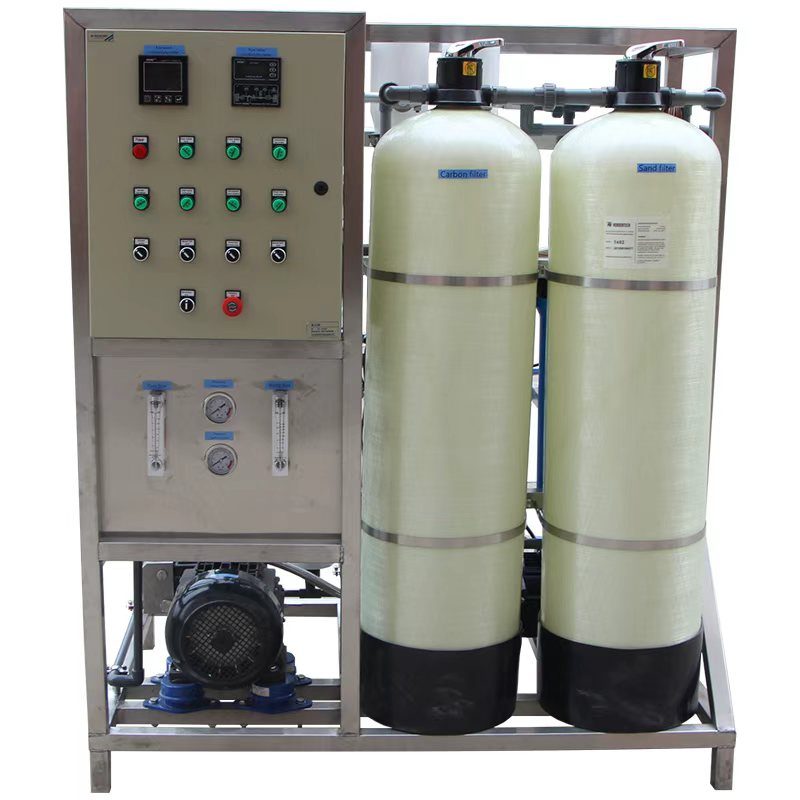
How Membrane Works
Behind every sip of RO-purified water you drink are three cups of water sacrificed. Have you ever wondered whether that cup of clear water you draw from your purifier each day actually takes several cups of tap water to produce?
A household reverse-osmosis purifier does more than simply filter water once as it travels from inlet to outlet. It relies on several filter stages, a booster pump and a reverse-osmosis membrane working together. High pressure forces water molecules through an extremely fine membrane. The process does not add chemicals to the water or change its chemical nature; purification mainly relies on physical separation. Yet many people do not realize that the factors affecting drinking-water safety and service life are often not just the RO membrane itself, but the inexpensive, easily overlooked filters ahead of it.
First barrier: the PP sediment filter
Tap water first passes through a PP filter, a polypropylene sediment cartridge. Its filtration rating is approximately 5–20 micrometres. A human hair is about 70 micrometres in diameter, so PP filters can trap larger particles such as rust, sand and plastic fragments. However, they cannot stop bacteria around 0.2 micrometres in size, nor can they significantly lower the water's TDS.
TDS means total dissolved solids. It reflects the total amount of dissolved substances such as salts and minerals. The higher the value, the more dissolved material the water contains. Municipal tap-water TDS is typically between 100 and 240. After a PP filter, water may look cleaner, but dissolved minerals and ionic impurities remain.
Second barrier: activated carbon
Next comes the activated-carbon filter. The selective layer of an RO membrane is usually made of polyamide, which is sensitive to chlorine. Chlorine is added during tap-water disinfection. If it reaches the RO membrane directly, it may damage the selective layer and shorten its service life.
Activated carbon adsorbs residual chlorine, odours, some organic pollutants and pesticide residues. Adsorption by the pre-carbon filter and the subsequent carbon-block filter reduces the impact of residual chlorine on the RO membrane. Water may also contain calcium and magnesium ions, which can form scale on the membrane surface and increase its workload. Pretreatment filters therefore are not optional extras: they provide coarse filtration and protection.
Third barrier: pressure and the RO membrane
An RO membrane needs relatively high pressure to operate, typically about 15 bar, or approximately 220 PSI. A booster pump provides that pressure, pressurizing the pretreated water and continuously feeding it into the RO membrane assembly. Without enough pressure, water molecules have difficulty crossing the membrane and purification performance drops noticeably.
The RO membrane is one of the purifier's more expensive and most important components. It is usually made from several layers wound into a cylindrical element. The surface is a polyamide selective layer with an approximately 0.1-nanometre pore size, supported underneath by polysulfone and polyester layers. Feed spacers and permeate carriers sit between the membrane sheets before they are rolled into a cylinder.
Under pressure, water molecules cross the membrane and enter the central purified-water collection tube. Salts, heavy metals, bacteria, viruses, microplastics and some minerals are retained on the feed side and discharged with the wastewater.
Why RO produces wastewater
One frequently overlooked fact is that RO purifiers do not use all the incoming water as product water. Typically, only 20–30% of the feedwater becomes purified water; most of the remainder leaves as wastewater. The higher the feedwater TDS, the lower the product-water yield often becomes.
The flow restrictor in the wastewater line is also important. It limits the wastewater discharge rate so that the system maintains sufficient internal pressure for water to keep crossing the RO membrane. Without this component, pressure can dissipate and purification performance can suffer.
Final stage: UV disinfection or ultrafiltration
If an RO membrane already blocks bacteria and viruses, why do some models include a UV disinfection chamber or an ultrafiltration cartridge? Because RO primarily acts as a physical barrier to microorganisms; it does not directly destroy their genetic material. Tiny membrane defects, poor sealing or incorrect installation can theoretically allow microorganisms to reach the purified-water side.
A 254-nanometre ultraviolet lamp can damage microbial DNA and inactivate microorganisms. Some models also add an ultrafiltration cartridge at the outlet as a final physical barrier. This provides another layer of protection if the preceding stages experience minor variations.
How does an RO purifier actually clean water?
It does not rely on adding chemicals or on a mysterious material that instantly makes water clean. Its basic logic is to use inexpensive prefilters for coarse filtration and to protect the booster pump and RO membrane; then use high pressure to move water through a membrane with a filtration scale of about 0.1 nanometres, retaining more impurities. Finally, UV or ultrafiltration can be used as needed to further reduce microbial risk.
The most important everyday maintenance point is to replace the prefilters on schedule. They may look inexpensive, but they protect the core components. If PP and activated-carbon cartridges are left unchanged for too long, the expensive RO membrane is often the first major component to suffer.
What do you use at home: an RO purifier, an ultrafiltration unit, or tap water directly? Have you ever measured the TDS of your tap water?